Adagissimo
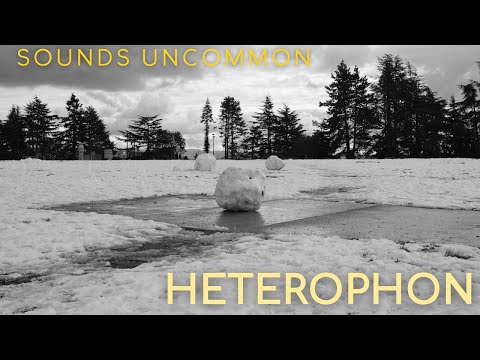
Perhaps you’ve never seen a video in which a person creates music with his own hands using a modular synthesizer. Or maybe you have seen too many of them. In any event, here is one such video. In this case, my own hands are making all the sounds you hear, and you can verify this with your own eyes.
Perhaps that’s hard to believe, but it is so.
This work was brought to you by the Make Noise modDemix, which for such a tiny little module (it’s 6 hp!—that’s small) plays an outsize role here. It does ring modulation quite well. Actually, it does it quite right.
I should also say that “adagissimo” is a legit musical tempo indication. Like most self-respecting tempo markings, it’s Italian, and it means “quite slow.”
How, you might ask, is that so? Or perhaps you’re not asking, but I’m just going to be pedantic anyway and tell you: “adagio” means “slow.” “-issimo” means “a lot,” so “adagissimo” means “a lot slow,” which is ungrammatical, so we’d rather say “quite slow,” or even “very slow.” Not as slow as “lento,” which means “really slow” (like funereal slow), but we don’t need to split hairs.
I should also say that Brian Ferneyhough beat me to the title with his 1983 work for string quartet of the same name. I don’t pretend to write music like Ferneyhough; many have tried, but only he can write music so complex that the score sometimes is more a map of interpretive possibilities than a definitive statement. He also speaks amazingly flawless, extremely intellectual Hochdeutsch. I’m rather jealous of that.
There’s also “adagietto”; “-etto” is a diminutive, so the word as a whole means “a little slow.” Quite confusingly (for me at least), that usually means “slower than adagio.” So, if I had to rank them in terms of slowness, you’d get adagissimo—adagietto—adagio. But, I didn’t have to rank them; I just did it anyway.
Thank you for attending my TED talk, and I trust you have no questions. I didn’t explain what ring modulation is, but suffice it to say that it does not involve rings.